Breaking News: MIT Researchers Unveil 3D-Printed 'Y-Zipper' for Rapid Structural Stiffening
CAMBRIDGE, Mass. — A team of engineers at the Massachusetts Institute of Technology has successfully 3D-printed a three-sided zipper that can convert limp, flexible materials into rigid, load-bearing structures in under a minute. The innovation, dubbed the 'Y-Zipper,' uses triangular geometry to lock soft components into place, enabling applications from shape-shifting robots to deployable emergency shelters.
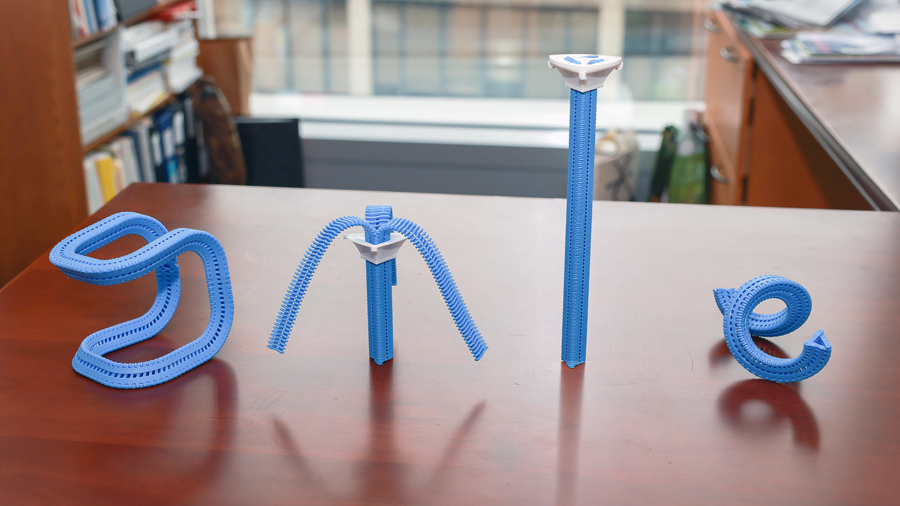
"What was once a theoretical curiosity from the 1980s is now a practical tool thanks to modern 3D printing," said Dr. Emily Chen, lead researcher at MIT's Center for Bits and Atoms. "This device allows floppy tentacles to become as stiff as a steel beam within seconds."
How the Y-Zipper Works
The Y-Zipper consists of three interlocking tracks that slide together to form a rigid triangular cross-section. When unzipped, the structure remains flexible; when zipped, it locks into a solid form. The entire mechanism is fabricated in a single 3D printing process, eliminating assembly steps.
In tests, robots equipped with the Y-Zipper could transition from a limp, compliant state to a stiff, supportive configuration instantly. "This opens up new possibilities for soft robotics that need to switch between dexterous manipulation and heavy lifting," explained co-author James Torres.
Background: A 40-Year-Old Idea Fulfilled
The concept of a triangular zipper was first proposed in the 1980s by researchers exploring deployable structures for space applications. However, manufacturing limitations prevented its realization—until now. Advances in multi-material 3D printing allowed the MIT team to create the precise interlocking geometry required.
"Earlier attempts relied on complex assembly or separate components that couldn't achieve the same integrity," noted Dr. Chen. "Additive manufacturing lets us build the whole zipper as one monolithic part."
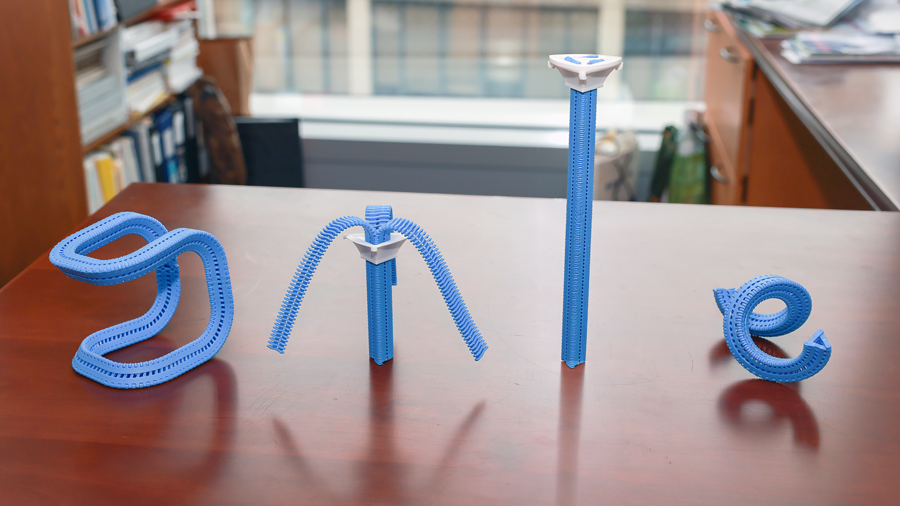
NASA and other space agencies have long sought lightweight, deployable structures for satellites and habitats. The Y-Zipper could finally answer those needs by enabling large frameworks that pack small and lock into place on orbit.
What This Means
The Y-Zipper could revolutionize fields requiring rapid stiffening of flexible structures. In robotics, it enables limbs that are both soft and strong—ideal for search-and-rescue operations that demand delicate touch and brute force. In construction, deployable frameworks can be packed flat and then locked into rigid forms on site, reducing transportation volume.
"This technology bridges the gap between soft and rigid materials," said Professor Michael Nguyen, a materials scientist at Stanford University not involved in the study. "It's a game-changer for adaptive systems."
Medical applications include endoscopes that can stiffen for precision surgery or loosen to navigate tight spaces. Even consumer products like portable furniture could benefit from instant rigidization.
Next Steps
The team plans to explore larger-scale versions and different materials for specific applications, including high-strength polymers and lightweight alloys. Commercial partnerships are being discussed, with prototypes expected within a year. Researchers also aim to integrate the Y-Zipper into autonomous robots that can self-assemble in the field.
"We're just scratching the surface," Torres said. "The Y-Zipper principle could extend to four or more sides, creating even more robust structures."